
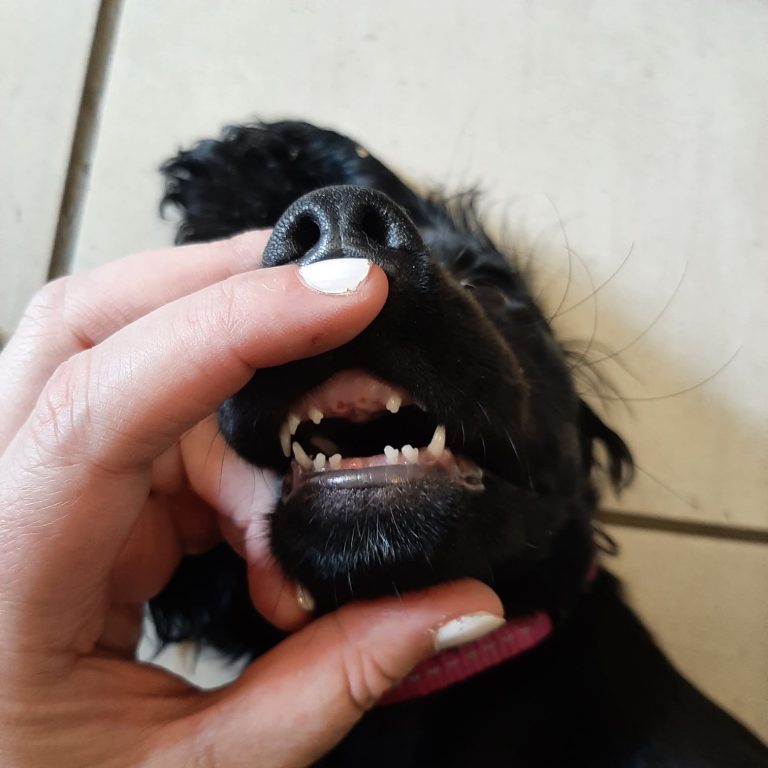
Puppies typically start teething at around 3-4 weeks of age, when their baby teeth, also known as milk teeth or deciduous teeth, begin to come in. This process can continue until the puppy is around 6-8 months old, when their adult teeth have fully grown in and replaced the baby teeth. During this teething period, puppies may experience discomfort and may try to alleviate it by chewing on objects. It’s important to provide appropriate chew toys for your puppy during this time to help relieve their discomfort and prevent them from chewing on inappropriate items, such as shoes or furniture.
Let’s take a look at, the order in which puppies typically lose their baby teeth, what happens when a baby tooth doesn’t fall out, how best to deal with puppy teething, and the best toys to give your furbaby during this time.
In which order do puppies lose their baby teeth?
Puppies generally lose their baby teeth in a specific order, and the process can take several months:
- Incisors: The front teeth, located in the centre of the mouth, are usually the first to fall out. These are usually lost at around 3-4 months of age. Your baby looks super cute during this phase. Like a little first grader.
- Canines: The sharp teeth located next to the incisors will fall out next, at around 4-5 months of age.
- Premolars: The larger teeth located towards the back of the mouth, will start to fall out at around 4-5 months of age.
- Molars: The very back teeth, which are also the largest, will be the last to fall out. This typically happens at around 5-7 months of age.
It’s important to note that the timing of when puppies lose their baby teeth can vary based on breed and individual development. Additionally, some puppies may lose their teeth earlier or later than this typical timeline, but this is usually nothing to be concerned about. If you’re unsure about your puppy’s teeth development or have any concerns, it’s best to consult with a veterinarian.
What happens when my puppy’s milk tooth does not fall out?
Sometimes, a puppy’s milk tooth (also known as a deciduous tooth or baby tooth) may not fall out as expected, and the permanent tooth may start growing in behind it. This can cause several problems, including:
- Crowding: The retained milk tooth can cause the permanent tooth to grow in at an angle or in the wrong position, leading to crowding and misalignment of the teeth.
- Tooth decay: The retained milk tooth can create pockets and spaces in which food and bacteria can accumulate, leading to tooth decay and gum disease.
- Pain and discomfort: If the retained milk tooth is putting pressure on the gums or causing the permanent tooth to grow in at an awkward angle, it can cause pain and discomfort for the puppy.
If your puppy’s milk tooth doesn’t fall out on its own, it’s important to have them examined by a veterinarian. In some cases, the vet may need to extract the retained tooth to prevent any problems from developing. This is a relatively simple procedure that can be done under anaesthesia. Early intervention can prevent more serious dental problems later on, so it’s important to address any issues with your puppy’s teeth as soon as possible.
Best ways to deal with puppy teething
Just as for teething children, this time is very difficult for your puppy. Here are some tips for dealing with puppy teething:
- Provide appropriate chew toys: Give your puppy a variety of chew toys to play with, such as rubber toys or toys made specifically for teething puppies. Avoid giving your puppy toys that are too hard, as they can damage their teeth. We will look at the specific types of toys in the next section.
- Freeze their toys: Try freezing your puppy’s chew toys to help soothe their gums. The cold temperature can provide some relief for their sore gums.
- Supervise their playtime: Keep a close eye on your puppy when they are playing with their toys, and make sure they don’t chew on inappropriate items, such as furniture or electrical cords.
- Distract them: If your puppy starts chewing on something they shouldn’t, distract them with a toy or a game. This can redirect their attention and prevent them from developing bad chewing habits.
- Provide dental care: During the teething process, it’s important to take care of your puppy’s teeth. You can do this by starting to brush their teeth regularly and providing dental chews or treats that are designed to promote healthy teeth and gums. Make sure these are made for puppies.
- Be patient: Remember that teething is a normal process, and it may take some time for your puppy to adjust. Be patient and consistent with your training, and your puppy will eventually learn appropriate chewing behaviour.
The best toys to get your teething puppy
Make sure that the toys you get your puppy are designed or appropriate for puppies. Some toys made for adult dogs are not appropriate for puppies and can actually hurt them. Here are some of the best toys for a teething puppy:
- Rubber toys: Rubber toys are great for teething puppies because they are durable and can withstand a lot of chewing. Look for toys that are made from safe, non-toxic materials and puppy friendly rubber.
- Rope toys: Rope toys are great for puppies because they can help clean their teeth and massage their gums. Choose a rope toy that is made from high-quality materials that won’t fray or break apart easily.
- Kongs: A Kong is a classic dog toy that can be filled with treats or peanut butter to keep your puppy entertained for hours. They also have a unique shape that can help massage your puppy’s gums as they chew. Be sure to get the Puppy Kong in the appropriate size for your pups breed and size.
- Frozen toys: Try freezing some of your puppy’s toys to help soothe their sore gums. You can freeze rubber toys, rope toys, or even a wet washcloth for your puppy to chew on.
- Plush toys: Some puppies also enjoy biting on their teddies and plush toys. This is not chewing to destroy the toy, just biting into the toy to help with sore gums.
- Puzzle toys: Puzzle toys are great for keeping your puppy mentally stimulated while they chew. Look for puzzle toys that are specifically designed for puppies, and make sure that they are made from safe, non-toxic materials.
Remember to always supervise your puppy when they are playing with toys, and make sure to choose toys that are the appropriate size for your puppy. If a toy becomes damaged or starts to break apart, it’s time to replace it.