
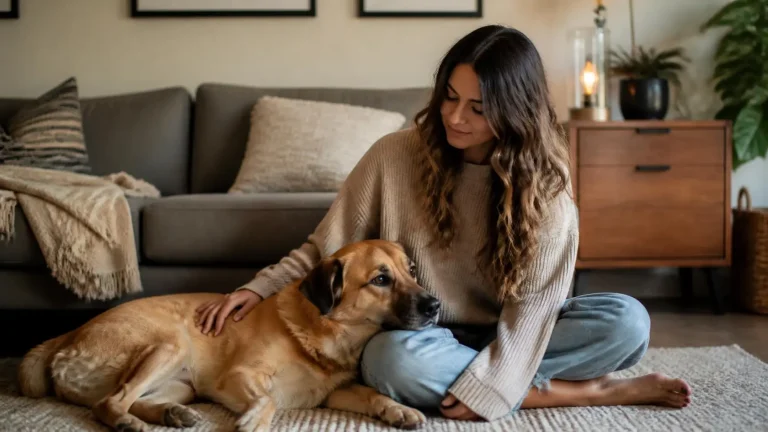
If you read Part 1 of this series, The Mirror in the Room: When Your Furkid Holds Your Heart, you’ll know we started with something deeply personal: the way our furkids can sometimes mirror what is happening inside us.
In the Calm Connection, I call this The Reflection — the way our dogs show us what their nervous systems are picking up, often before we fully admit what is going on in our own.
That conversation can feel tender, because once you realise your dog may be reflecting your stress, sadness, or emotional overload, you can’t really unsee it.
But after that awareness usually comes the next question:
How do I know if my dog is actually anxious… or just energetic, sensitive, or having a weird day?
And honestly, that’s where many dog moms get stuck.
Because anxiety in dogs does not always look dramatic. It’s not always shaking in the corner or hiding under the bed while the thunder rolls in. Sometimes it looks much quieter than that. Sometimes it looks like clinginess. Restlessness. Barking. Zoomies at the end of a busy day. A dog who just cannot seem to switch off.
Sometimes it looks like “naughty” behaviour when what is really going on is a nervous system asking for help.
If that sounds familiar, take a deep breath. You are not failing your dog. You are learning your dog’s language — and that matters.
Here are seven signs your furkid may need more calm in their life.
1. Your dog struggles to switch off
This is one of the biggest clues, and one that is easy to miss.
A dog who is constantly “on” is not necessarily thriving. If your furkid paces around the house, follows every movement, seems unable to settle, or keeps searching for the next thing to do even after a walk or play session, they may not need more stimulation. They may need more regulation.
There is a difference.
A stimulated dog can still rest. A dysregulated dog often cannot.
And as dog moms, we sometimes accidentally feed that cycle because we think, Oh no, they’re bored — I must do more. Another toy. Another game. Another outing. Another treat puzzle. Meanwhile, your poor furkid is running on the emotional equivalent of three coffees and a group chat argument.
Sometimes calm is more healing than busy.
2. Their reactions seem bigger than the moment
Does your dog bark wildly when someone walks past the gate? Startle dramatically at small noises? Lose their marbles when another dog appears in the distance? Panic when plans change or visitors come over?
Big reactions do not always mean a “bad” dog. Often, they mean a dog who is already emotionally full.
Think of it like us after a stressful week. One tiny inconvenience — an email, traffic, the sound of someone chewing too loudly — and suddenly we are hanging on by a thread.
Dogs have that threshold too.
When their cup is already full, even small things can tip them over.
3. They become extra clingy or shadow you everywhere
Some dogs are naturally little velcro babies, and that alone is not a problem. But if your dog seems unable to relax unless they are right on top of you, follows you from room to room, or becomes distressed the second you disappear behind a door, it may point to anxiety rather than simple affection.
Closeness can become a coping strategy.
And this can get even stronger when your dog senses that you are carrying tension yourself. Dogs are incredibly tuned in to our tone, routine, body language, and energy. When we are stretched thin, they often notice long before we say it out loud.
That does not mean you must never have a bad day. It just means their behaviour may be giving you useful information.
4. Repetitive habits start increasing
This one deserves attention.
If your dog suddenly starts licking their paws more, chewing obsessively, spinning, shadow chasing, sucking blankets, whining repetitively, or fixating on one strange little habit, it can sometimes be a self-soothing behaviour.
That said, not every repetitive behaviour is emotional. Sometimes there is a medical issue involved, like allergies, pain, skin irritation, or digestive discomfort. So if something is new, intense, or escalating, it is always worth checking in with your vet first.
But if these habits seem to flare up during stressful times, after overstimulating days, or during changes in the home, your dog may be trying to regulate themselves the only way they know how.
In other words: it may not be mischief. It may be coping.
5. They seem exhausted but still unsettled
This one is sneaky.
Many of us assume that if a dog is tired, they will just sleep. Simple.
But anxious or overstimulated dogs are not always able to settle easily, even when they are clearly shattered. They may lie down, then get up again. Sigh dramatically. Flop on one side, then the other. Wander around. Seem sleepy, yet somehow still wired.
It is a bit like when you are desperate for sleep but your brain insists on replaying every awkward thing you’ve done since 2009.
That in-between, restless-tired state can be a sign that your dog needs decompression, not just more exercise.
6. Their normal habits start shifting
Stress does not only show up in obvious behaviour.
Sometimes it shows up in appetite, digestion, sleep patterns, toileting, or changes in their usual mood. A dog who normally wolfs down breakfast may suddenly seem picky. A dog who usually sleeps deeply may wake often. A dog who is normally easy-going may feel a bit “off” and you cannot quite explain why.
Dogs speak through their bodies all the time.
And while not every change means anxiety, it is worth paying attention when physical patterns shift alongside behavioural ones. The body and nervous system are connected — in dogs just as much as in us.
7. They look fine in public… then unravel at home
Some dogs are masters at holding it together.
They manage the walk. They cope with the outing. They survive the visitors. They seem “fine”. Then they get home and suddenly the barking starts, the pacing begins, the whining kicks in, or they become completely unable to settle.
That does not necessarily mean they were relaxed out there.
It may mean they were coping very hard.
This is something many anxious dogs do. They keep themselves together in stimulating environments, then fall apart once they are back in their safe space. Rather like a human who gets through the workday looking functional, only to cry in the kitchen while making toast.
Which, let’s be honest, is a deeply humbling life experience.
So what should you do if you recognise your dog in this?
First: do not panic.
And please do not jump straight into guilt either.
Noticing the signs does not mean you caused them. It means you are tuned in enough to help.
Start by observing patterns.
If you worked through the Calm Connection tracker from Part 1, this is where it becomes especially helpful. You’re not looking for perfection — just noticing when The Reflection in your furkid lines up with what The Anchor is carrying in the home.
Ask yourself:
- When does my dog seem most unsettled?
- What usually happens before the behaviour starts?
- Are there specific triggers, like noise, visitors, being left alone, busy walks, or changes in my own routine?
- What seems to genuinely help them settle?
You do not need to become a canine detective with seventeen spreadsheets and a laminated chart. A few gentle observations can already tell you a lot.
Then look for ways to simplify your dog’s world.
Sometimes we think support means adding more: more exercise, more outings, more toys, more enrichment, more social time. But for an overwhelmed dog, the answer is often not more.
It is less.
Less chaos.
Less pressure.
Less unpredictability.
Less constant stimulation.
And more rest.
More routine.
More quiet connection.
More opportunities to just be.
A gentle word for dog moms carrying a lot
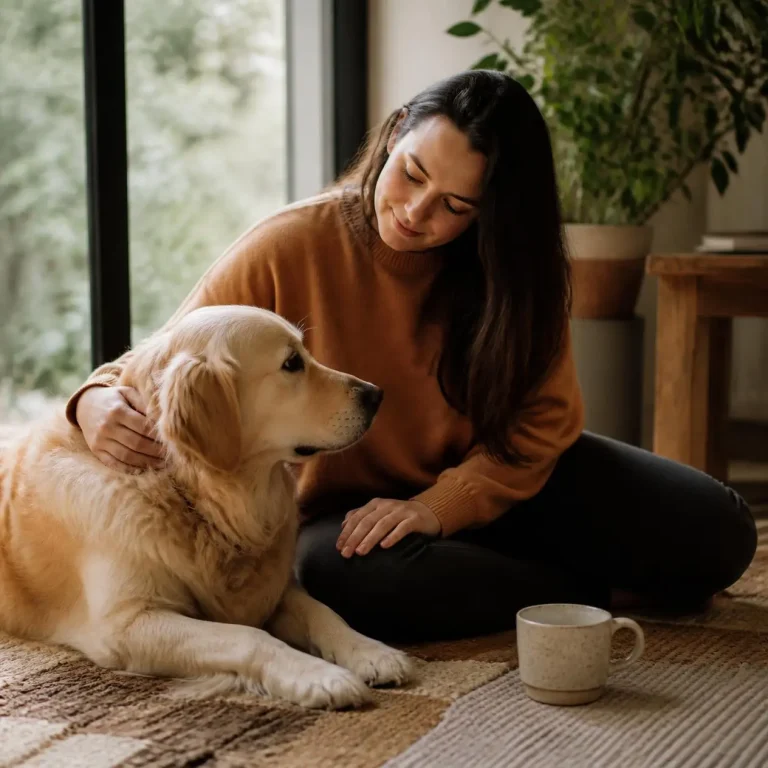
If your dog has been feeling fragile lately, I want to say this with love: please do not make yourself the villain.
Yes, our dogs can reflect what we are carrying. Yes, our homes affect them. Yes, our emotional climate matters.
But awareness is not the same thing as blame.
In fact, awareness is where healing starts.
One of the most beautiful things about loving a dog is that they often show us what needs attention. Sometimes that attention is for them. Sometimes it is for us. Often it is both.
And that is exactly why this conversation matters.
Because a calm dog is not created through perfection, expensive gadgets, or performing “the ideal routine” for Instagram. A calm dog is supported through safety, consistency, compassion, and small daily choices that help their nervous system feel less alone.
And if you have not yet read Part 1, it may help to go back and work through the Calm Connection tracker first. Sometimes the clearest way to understand our dogs is to observe the pattern without judgement.
In Part 3 of this series, we’ll look at how to build a realistic calm routine for an anxious dog — without turning your life into a military programme or making you feel like you need a colour-coded clipboard just to survive Tuesday.
Because most of us are simply trying to keep everyone fed, somewhat emotionally stable, and off the clean washing.
And honestly? That counts.
CTA: If this post reminded you of your own furkid, save it for later and share it with another dog mom who needs the reminder that “busy” and “happy” are not always the same thing. For more calm-dog support, practical dog mom life tips, and future updates on the Calm Furkid app, keep following Life with a Furkid.